

01:26:00 15.11.2025
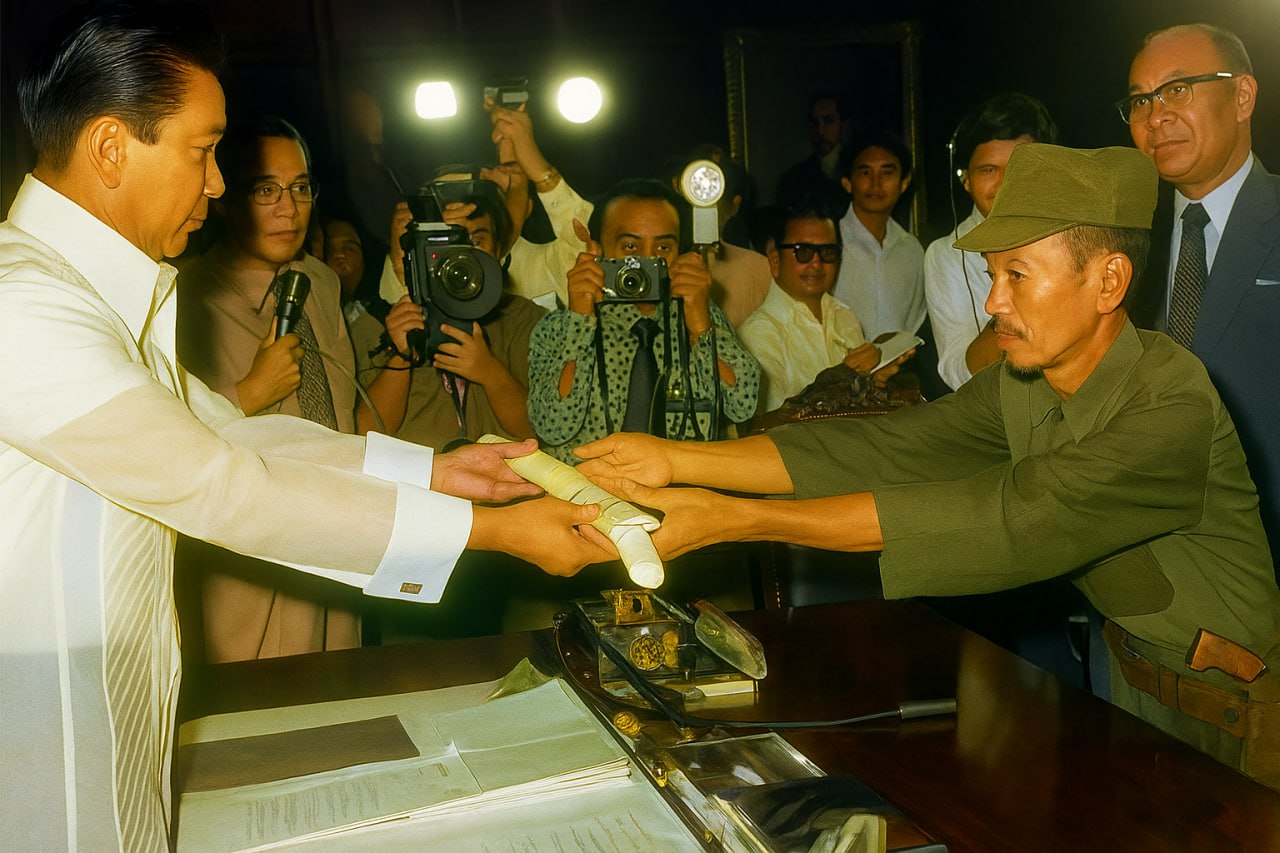
The man on the right side of the picture is the Japanese soldier Hiroo Onoda, whose nickname became “The Last Imperial Soldier.” During the Second World War, he was a lieutenant in the Imperial Japanese Army who, in December 1944, was sent on a special mission to the Philippines with several soldiers to wage guerrilla warfare. Their order had been “never surrender,” and they were told: “Whatever happens, we will come for you.” They lived in the mountains and continued to terrorize the local population, especially landowners. After the end of the war and Japan’s defeat, the Philippine government dropped leaflets from the air saying, “the war is over, come down from the mountains,” but they did not believe it, thinking it was enemy propaganda meant to deceive them.
As time passed, Onoda’s soldiers died for various reasons, and he remained alone. Still, he stubbornly refused to surrender and continued his struggle for years. Thus, Onoda became a legend in Japan, and for that very reason, thirty years later a Japanese explorer and traveler named Norio Suzuki set out with the goal of finding him. In February 1974, he indeed found Onoda in the mountains and befriended him. Suzuki told him that the war had ended 30 years earlier, but Onoda still did not believe it and insisted that he would not surrender until his direct commander personally came and ordered him to lay down his weapon. Suzuki returned to Japan, found the commander, and told him everything. The commander then went to the mountains of the Philippines himself and officially disarmed Onoda.
During those thirty years, Onoda had killed 30 Filipinos, but when he went to the President of the Philippines, Ferdinand Marcos (the man on the left in the picture), to hand over his imperial sword, the president returned it to him and granted him a pardon, because he deeply respected Onoda and was moved by his story and unbreakable fighting spirit. Onoda returned home and was welcomed as a hero. That same year, in 1974, he wrote a book titled “No Surrender: My Thirty-Year War.”
The Jews have made a thousand films about the Second World War—mostly focusing on the Great Lie—but not a single film has been made about this heroic story. This is the kind of story that even the greatest directors could not invent, because there is no story better than reality. This extraordinary episode of the Second World War, and Onoda’s example, should be taught in our schools and especially in the army—to show what an obedient and a soldier with absolute dedication looks like.
Subscribe and receive news to your email address.
Comments