

09:57:00 21.04.2026
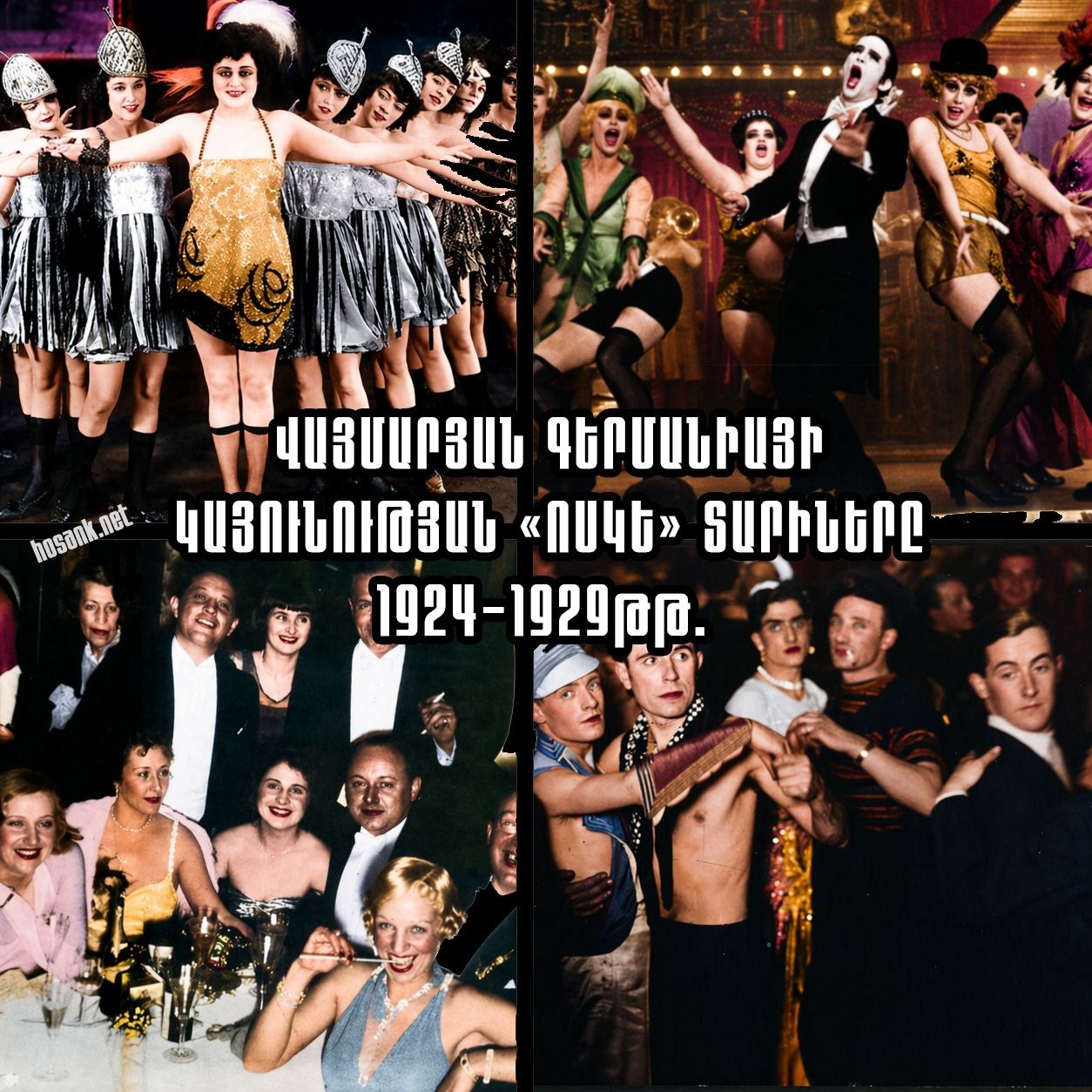
The humiliated and disgraced condition of Armenia today can be compared to Weimar Germany. It was a period that was very different from our situation, yet at the same time also very similar. Completely different times, states, and geopolitical circumstances, but when we compare them, we can see that there are also many similarities. In both cases we see a nation that has suffered a humiliating defeat and has sunk into deep indifference, living as if under hypnosis.
Weimar Germany, as we know, was created in 1918 as a result of Germany’s defeat in the First World War—on November 9 of that same year, which occurred due to internal betrayal. Germany lost its colonies, about 20 percent of its continental territory, and was forced to pay astronomical reparations to the Entente countries. Until 1924, Germany’s situation was quite unstable, because there was no order, Germany continued to lose territories, and the economy continued to decay from within. The situation was so severe that between 1921 and 1923 Germany experienced one of the greatest hyperinflations in world history. During those five years most Germans lived in fear and uncertainty.
However, the situation began to gradually ease when in 1924 the so-called Dawes Plan began, through which large loans from the United States flowed into Germany, the reparations payments were reorganized, and the German economy at least superficially began to recover. This is why the years 1924–1929 are often called the “golden” or relatively stable years of Weimar Germany, because the currency stabilized, industry recovered, and outwardly it seemed that the cities were experiencing economic and cultural revival.
But in reality all of this was an illusion, since that stability was largely based on American loans, and the Weimar Republic itself had been founded upon a treacherous defeat. On the surface everything looked fine, but inside it was festering. Moreover, the so-called “cultural revival” was in reality an era of the corruption of German and of Aryan values in general, where prostitution, homosexuality, pornography, transgenderism, and other such destructive phenomena were spreading widely. The state itself was completely fragmented because of various anti-national parties such as the Social Democrats and Communists, and the political arena from top to bottom was full of opportunistic traitors. Against this background, most Germans during that period lived like ostriches, people went on with their daily lives as if nothing had happened and as if “everything would be fine.” They believed that the loans coming from America would continue endlessly and that stability would last forever. They were enjoying the nightlife—clubs and cabarets—without thinking about tomorrow. For more serious people, however, the situation seemed hopeless and they became pessimistic and cynical.
Yet during that time there existed a tiny minority of farsighted and reasonable nationalists and true German patriots who warned their compatriots that they were living in an illusion and that a crisis was coming. But the overwhelming majority ignored them and did not take them seriously, because those nationalists were considered “extremist” and “unrealistic.” For that reason the nationalist party’s support in elections did not exceed 3 percent. They lived through their “wilderness years” and were entirely on the political margins. They were ignored by the media or subjected to ridicule.
However, in 1929 an economic crisis began in America, loans stopped reaching Germany, and overnight the entire illusion was torn apart. Unemployment, instability, and poverty suddenly rose sharply. The state was on the verge of total collapse. Those nationalists who for years had warned the people and prepared for the crisis went from being a marginal force to becoming central and eventually the main political force. Afterwards, through legal means and their own strength, they came to power and were able to pull Germany out of the chaos of that crisis, saving their country from a communist revolution and final fragmentation.
Knowing all this, how can we not draw parallels with our present situation? Since 2018 or 2020, are we not living in a “Weimar” Armenia?...
“History does not repeat itself, but it often rhymes.” — Mark Twain
#This_Time_the_World
Subscribe and receive news to your email address.
Comments