

04:27:00 23.06.2026
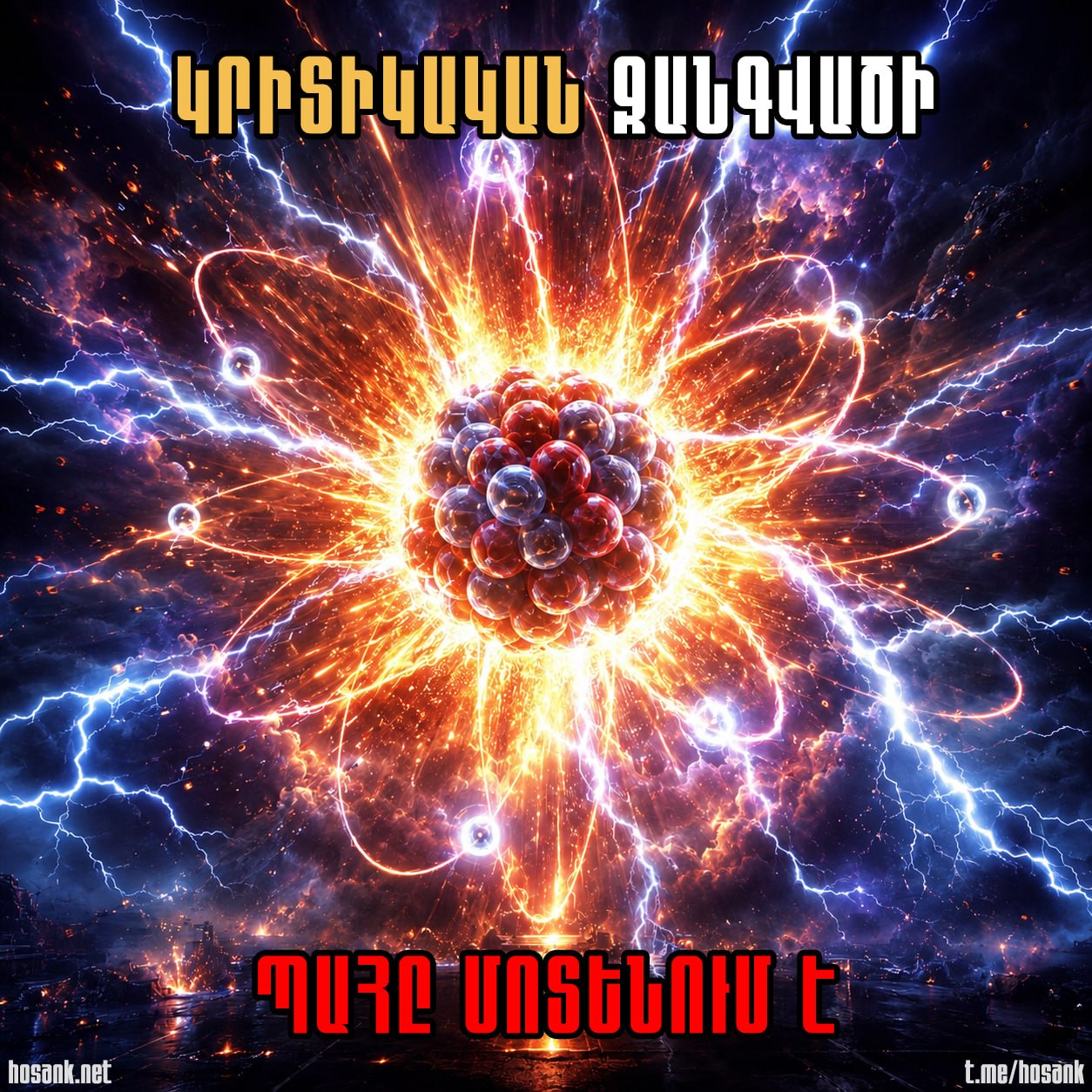
In physics, there is the concept of “critical mass,” which is the minimum amount of fissile material (for example, Uranium-235 or Plutonium-239) required to sustain a nuclear chain reaction on its own. In politics as well, however, there is a similar idea of critical mass, which national political movements must take into account.
Revolutionary movements do not grow continuously and gradually. For years, they may remain below the political “critical mass,” accumulating strength unnoticed. Then a historical crisis arrives, the threshold is crossed, and what was once a marginal movement becomes a self-sustaining force that begins to grow under its own momentum. Society often calls this a “sudden rise,” but in reality its foundations were laid much earlier, long before the reaction began.
In physics, it is accepted that the universe is governed by four fundamental forces: gravitational, electromagnetic, strong nuclear, and weak nuclear forces. However, this picture can also be approached as a philosophical metaphor, with an additional "force of will" which is not a physical law but a driving force of historical and social processes.
In this understanding, if the four forces build the physical universe, then willpower shapes historical processes and changes the fate of nations. And it is precisely this unbreakable "force of will" that a small nationalist group needs in order to reach critical mass at a decisive historical moment and transform into a nationwide movement, uniting the whole nation around one idea, one will, and one mission.
One Nation, One State, One Will
Toward Greater Armenia, Toward a Glorious Future!
#This_Time_The_World
Subscribe and receive news to your email address.
Comments